Global conflicts are not just political events — they are market-moving machines. If you’re still treating war news as “background noise,” you’re already behind.
Wars don’t just destroy economies. They redistribute money, shift power, and create massive trading opportunities. The smartest traders aren’t reacting emotionally — they’re tracking where capital flows next.
Right now, one of the biggest shifts happening globally is this:
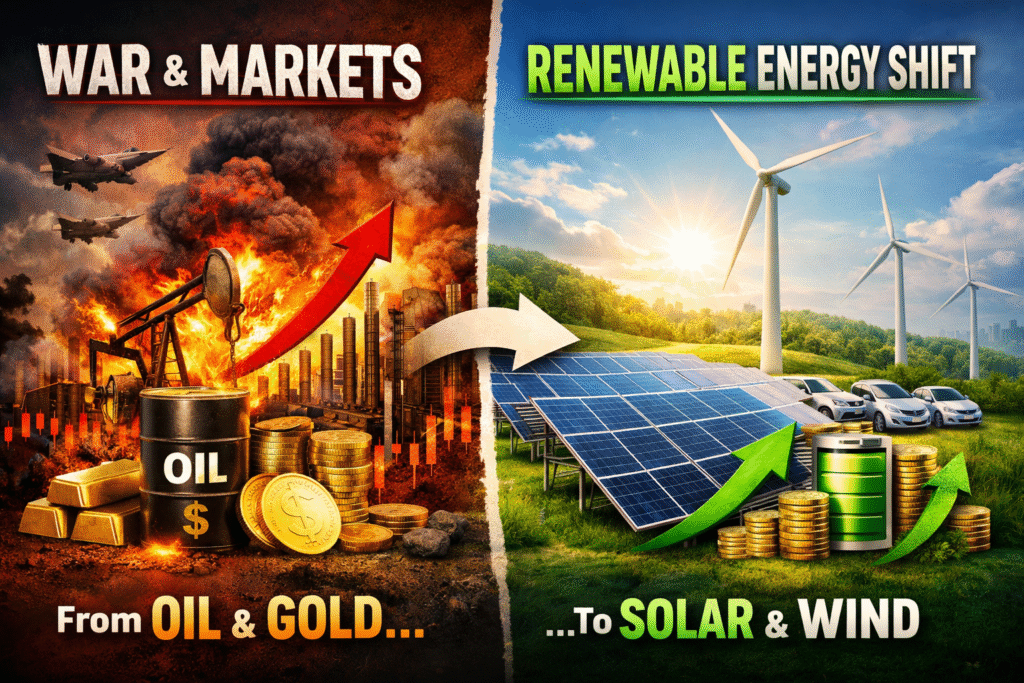
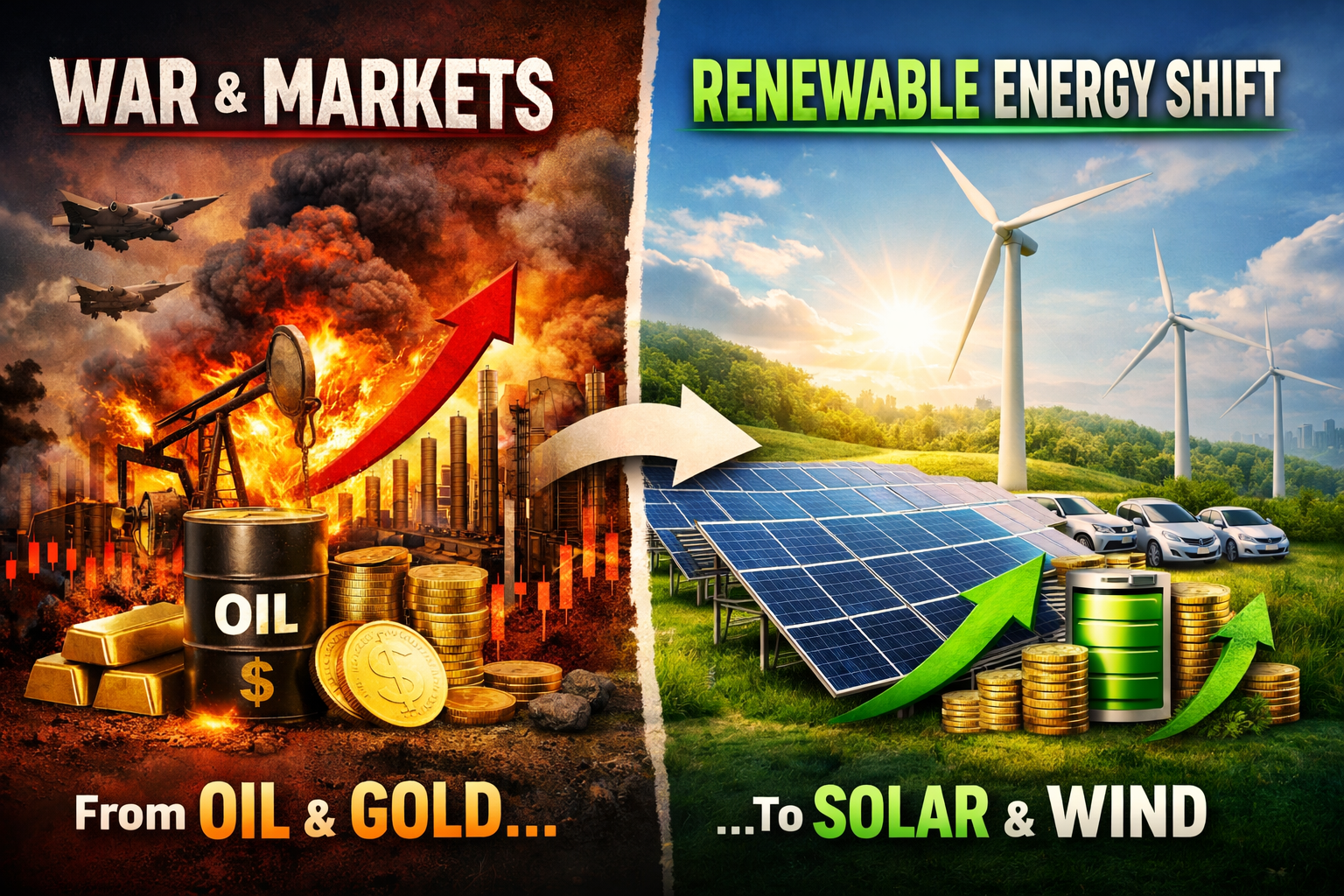
War → Energy Crisis → Renewable Energy Boom → Trading Opportunity
If you don’t understand this chain, you’ll keep chasing headlines instead of positioning early.
If you don’t understand this chain, you’ll keep chasing headlines instead of positioning early.
How War Impacts the Stock Market (And Why Most Traders Get It Wrong)
Every time geopolitical tension rises, markets react fast — but not randomly.
Here’s what actually happens:
- Oil prices spike due to supply disruption
- Gold rises as a safe haven asset
- Stock markets turn volatile
- Defense stocks rally
- Inflation fears increase
This isn’t new. It’s a pattern.
But here’s where most traders fail:
They react to price movement, not the cause behind it.
That’s why they panic-buy gold after it already spikes or short the market too late.
Smart traders ask:
- Where is the disruption?
- Which sectors benefit?
- Where will money rotate next?
For example:
Example 1:
When war affects oil-producing regions, crude prices rise → energy companies gain → transportation and manufacturing stocks suffer.
Example 2:
When uncertainty increases, investors move to safety → gold and defensive assets rise → growth stocks take a hit.
This is not guesswork. It’s capital behavior under stress.
The Energy Crisis: The Real Battlefield Behind Every War
Forget the headlines. Most modern conflicts are deeply tied to energy control — oil, gas, and power infrastructure.
When supply chains break:
- Oil shortages increase
- Gas prices surge
- Countries scramble for alternatives
This creates a global energy crisis, and markets react instantly.
Now here’s the critical shift most people underestimate:
Energy crisis doesn’t just increase oil prices — it accelerates renewable energy adoption.
Why?
Because dependence on fossil fuels becomes a national risk.
Countries start prioritizing:
- Energy independence
- Local power generation
- Sustainable infrastructure
That’s where renewable energy enters — not as an “eco-friendly choice,” but as a strategic necessity.
War Is Quietly Fueling the Renewable Energy Boom
You’re probably hearing about solar and wind energy growth. What you’re not hearing enough is why it’s accelerating so fast.
War is one of the biggest catalysts.
When traditional energy sources become unstable:
- Governments push solar adoption
- Investments shift toward clean energy
- Renewable stocks gain long-term momentum
This isn’t hype. It’s structural change.
Example 1:
Countries heavily dependent on imported oil start investing in solar farms and wind energy to reduce geopolitical risk.
Example 2:
Energy price shocks force industries to adopt alternative power sources, increasing demand for renewable infrastructure.
So when you see renewable energy stocks rising, it’s not just climate awareness — it’s economic survival strategy.
Trading During War: Where Smart Money Actually Moves
Let’s be blunt — trading during war is not about predicting headlines. It’s about tracking money flow.
Here’s where capital typically moves:
1. Commodities (Oil & Gold)
- Oil spikes due to supply disruption
- Gold rises as a safe haven
2. Defense Sector
- Increased military spending boosts defense stocks
3. Energy Sector Rotation
- Fossil fuels rise short-term
- Renewable energy gains long-term momentum
4. Defensive Stocks
- Utilities, healthcare, and essentials perform better
But here’s the catch:
Most traders only play short-term volatility.
They trade:
- Oil spikes
- Gold breakouts
And completely ignore the long-term shift into renewable energy.
That’s a mistake.
Renewable Energy as a Trading and Investment Opportunity
This is where you separate amateurs from serious players.
Renewable energy is not just a trend — it’s a multi-decade transition.
Key drivers:
- Government policies
- Energy independence goals
- Rising fossil fuel risks
- ESG investing trends
If you’re only trading short-term war volatility, you’re missing the bigger move.
Smart positioning includes:
- Solar energy stocks
- Wind energy companies
- Battery storage firms
- EV ecosystem players
Example 1:
A trader who understands war-driven energy shifts might short-term trade oil but accumulate solar stocks for long-term growth.
Example 2:
Instead of chasing gold after spikes, a smarter move is investing in renewable infrastructure companies benefiting from policy support.
India’s Position in the Renewable Energy Shift
If you’re trading or investing from India, ignoring renewable energy is just bad strategy.
India is aggressively pushing:
- Solar power expansion
- EV adoption
- Green hydrogen initiatives
Why?
Because energy dependence is a vulnerability.
War situations globally expose this risk even more, forcing countries like India to accelerate renewable adoption.
This creates massive opportunities in:
- Solar companies
- Power infrastructure firms
- Energy storage solutions
If you’re only watching global markets and ignoring India’s renewable push, you’re missing local alpha.
Risk Management During War-Driven Markets
Let’s kill another common mistake — overconfidence during volatility.
War markets are unpredictable. Even if your analysis is right, timing can destroy you.
So here’s what actually works:
- Avoid over-leveraging
- Focus on sector rotation, not random trades
- Combine short-term trading with long-term positioning
- Don’t chase news-driven spikes
Example 1:
Jumping into oil after a spike = late entry, high risk
Example 2:
Gradually building positions in renewable energy during dips = controlled, strategic approach Trading is not about being right once — it’s about staying profitable consistently.
The Big Picture Most People Miss
Let’s connect everything clearly:
- War creates instability
- Instability disrupts energy supply
- Energy crisis forces change
- Renewable energy becomes priority
- Capital flows into new sectors
This is not temporary.
This is a global transition.
And transitions create the biggest wealth opportunities.
The Timing Problem: Why Most Traders Lose During War Cycles
Everyone talks about what to trade. Almost nobody understands when.
War-driven markets move in phases:
Phase 1: Shock Reaction
- Sudden news → panic selling
- Oil spikes instantly
- Gold jumps
- Volatility explodes
👉 Example:
- Traders rush into gold after a breakout → enter at the top
- Retail panic sells equities → institutions quietly accumulate
Phase 2: Narrative Build-Up
- Media amplifies fear
- Analysts start predicting recession
- “Energy crisis” becomes a trending topic
👉 Example:
- Oil stays elevated → traders assume it will keep rising forever
- Renewable energy stocks start moving slowly → ignored by most
Phase 3: Capital Rotation
- Smart money exits overcrowded trades
- Funds shift into future sectors
- Renewable energy starts gaining real traction
👉 Example:
- Oil stabilizes or drops → late buyers get trapped
- Solar and green energy stocks begin steady uptrend
Phase 4: Normalization
- Volatility reduces
- Markets adapt
- New leaders emerge
👉 Example:
- Defense and commodities cool down
- Renewable energy becomes long-term outperformer
Final Reality Check
If your strategy is:
- Reacting to headlines
- Following social media tips
- Chasing trending stocks
You’re not trading — you’re gambling.
Real traders:
- Understand macro trends
- Track capital flow
- Position early
- Manage risk aggressively
Right now, the biggest shift is not just war.
It’s how war is reshaping:
- Energy markets
- Investment strategies
- Global economic power
And if you’re not aligning your trades with that shift, you’re already behind.
Bottom Line
War is not just destruction — it’s redistribution of opportunity.
Short-term:
- Trade volatility (oil, gold, defense)
Long-term:
- Position in renewable energy
Because the future isn’t just about surviving crises.
It’s about owning the sectors that rise because of them.
Most traders are still stuck reacting to war headlines instead of positioning for what comes next. The real shift is capital moving from unstable fossil fuel dependency to renewable energy systems. Short-term volatility in oil and gold creates trading opportunities, but the bigger money is in long-term renewable plays.
👉 Example 1: Trade oil spikes during conflict, then rotate profits into solar stocks.
👉 Example 2: Ignore panic selling in markets and accumulate renewable energy companies during dips.
If you don’t align with this shift, you’re not investing—you’re just chasing noise.